
Roof Rebedding in Brisbane: What Happens If You Delay It?
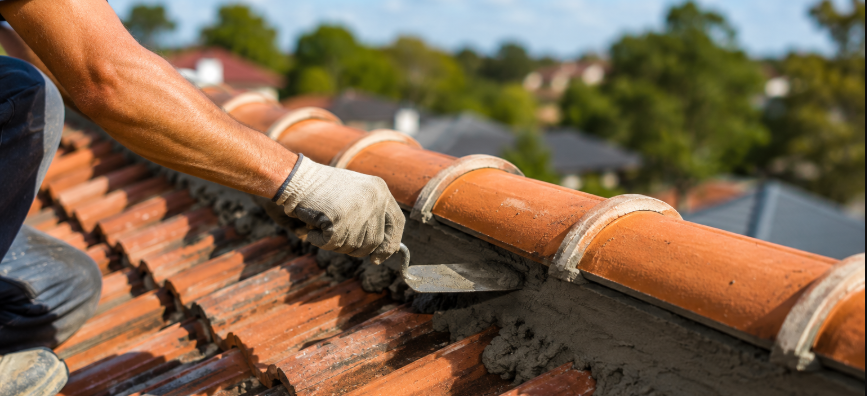
According to the Insurance Council of Australia, roofing failure accounts for roughly 25% of all extreme weather property claims. In South-East Queensland's volatile climate, delayed maintenance is the leading catalyst.
If you postpone roof rebedding in Brisbane, cracked mortar allows water to breach your ceiling cavity within three months. By month six, your internal pine framing is actively rotting. Within a year, a simple maintenance fix escalates into an expensive, structural re-roof. When the next severe storm hits, an unbedded ridge cap doesn't just leak; the aerodynamic uplift can tear it completely off your house.
Quick Guide: Bedding vs. Pointing
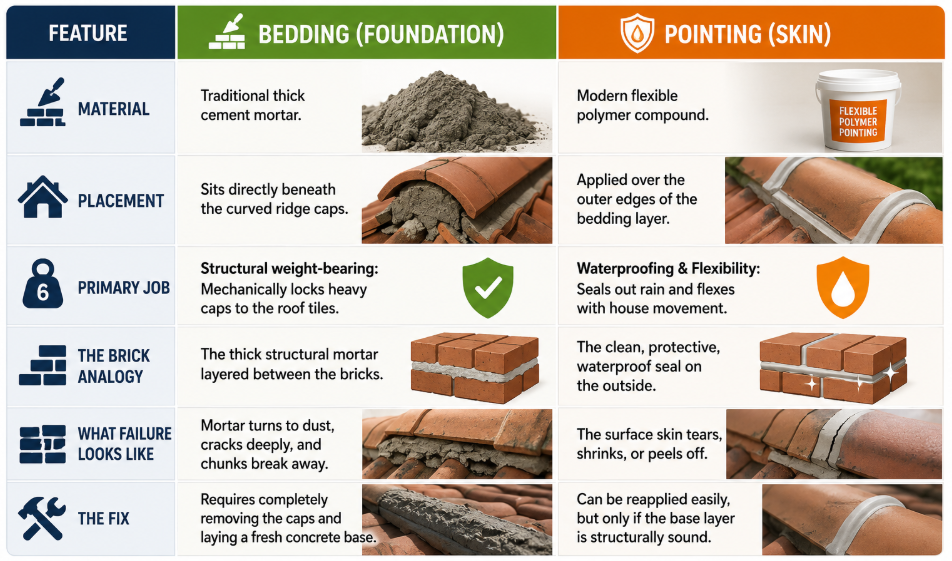
Why you can't have one without the other?
Think of it like a standard house renovation. If the timber framing underneath is rotten, a fresh coat of paint won't stop the wall from collapsing. Similarly, if your concrete foundation layer has turned to dust, putting a new layer of flexible pointing over the top is just a temporary band-aid. Properly restoring a ridge line requires a complete roof rebedding in Brisbane homes to ensure the structural base is entirely solid before any sealing begins.
What Happens When You Wait: A 12-Month Timeline
Roof damage doesn't happen overnight. It is a slow process that speeds up when the weather changes. If you delay roof rebedding in Brisbane, here is what happens over a year of neglect:
Months 1 to 3: Small Cracks Form
Intense sun and changing temperatures cause your roof tiles to expand and contract. Old cement loses its flexibility and cracks. You won't see a leak in your living room yet, but rainwater is already soaking into these tiny gaps, weakening the mortar from the inside.
Months 4 to 6: Water Sits on Your Timber
As the mortar breaks down, chunks of concrete fall into your gutters. Rain now runs straight under your ridge caps and drops directly onto your timber roof framing. Because your roof cavity is dark and warm, this constant moisture causes wood rot and mold long before you see a stain on your plaster ceiling.
Months 7 to 12: Loose Ridge Caps & Storm Damage
Once the bedding fails, your heavy ridge caps are held in place by little more than gravity. When a severe storm hits, high winds can easily slide or blow them off. A single missing ridge cap leaves a massive hole at the highest point of your house, leading to sudden, catastrophic water damage.
Financial Reality: Fixing It vs. Waiting
Here is a clean, easy-to-read comparison table that directly contrasts the costs and consequences of delaying your roof repairs:
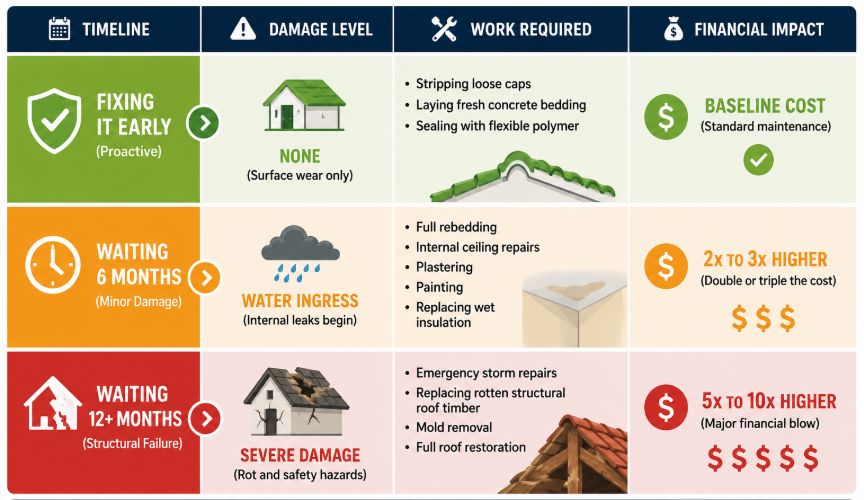
The Insurance Catch-22: Most Australian home insurance policies protect you against sudden storm damage, but they explicitly exclude long-term wear and tear. If an insurance assessor finds that your roof leaked because you neglected necessary roof rebedding in Brisbane, leaving old, crumbling mortar in place, they may deny your entire claim.
Ultimate Fix: Combining Structural and Visual Care
If your roof mortar is crumbling, the protective coating on the rest of your tiles is likely worn out, too. Porous tiles absorb water, grow ugly moss, and make the whole house look dated.
When we perform a full roof restoration in Brisbane, we fix the structural issues first through a clean, multi-step process:
1. High-Pressure Clean: Blasts away decades of dirt, moss, and baked-on lichen.
2. Rebedding & Repairs: Strips away all failed mortar and lays a solid concrete foundation.
3. Flexible Repointing: Seals the ridge caps with a modern polymer that won't crack.
4. Advanced Roof Painting: Coats the entire roof in a tough membrane to lock out water.
Our specialized roof painting in Brisbane uses a thick, weather-resistant acrylic membrane. This doesn't just make your home look brand new; it wraps your tiles in a shield that stops water absorption, blocks UV rays, and prevents destructive moss from growing back.
4 Signs Your Roof Needs Help Right Now
You don't need to climb up a ladder to check your roof's health. You can see the warning signs from your driveway:
1. Concrete in the gutters: You find chunks of grey mortar washed down into your gutters or downpipes.
2. Visible gaps: You can see daylight or open holes from the ground beneath your ridge caps.
3. Crooked lines: Your ridge caps look wavy, uneven, or shifted out of place.
4. Musty smells: You notice a faint, damp odor in your upper hallway or a small brown stain on your ceiling.
Let's Look After Your Roof
If you spot these warning signs, the safest move is getting an honest, professional opinion. At A-Line Roof Restorations, our 15 years of local experience and full QBCC licensing mean you get transparent, practical advice; never high-pressure sales tactics. From a simple roof rebedding in Brisbane to a complete structural restoration, we tell you exactly what your roof needs to stay safe.
Reach out to our team today for a straightforward assessment, and let's secure your home before the next storm season arrives.
FAQs
1. What is the difference between roof rebedding and repointing?
Bedding is the thick cement mortar foundation that structurally bonds the ridge caps to your roof tiles. Pointing is the flexible polymer skin applied along the outer edges of the bedding to form a waterproof seal. You cannot point a roof if the underlying bedding has cracked or turned to dust.
2. How do I know if my roof needs rebedding or just repointing?
If your ridge caps are physically loose or shifted out of line, or you see large chunks of concrete mortar breaking away and sitting in your gutters, you need a complete rebedding. If the mortar foundation is completely solid and only the outer colored seal is peeling or showing minor hairline cracks, you may only need repointing.
3.Will home insurance cover damage caused by delayed roof rebedding?
No. Most Australian home insurance policies explicitly exclude coverage for long-term wear and tear or neglected maintenance. If a severe storm shifts your ridge caps and the insurance assessor finds that the underlying concrete bedding was already crumbling and neglected, your entire claim for internal water damage could be denied.
4. How long does a new concrete roof bedding last?
Traditional cement bedding typically lasts between 10 and 15 years before the intense Queensland sun and constant thermal expansion cause it to crack and shrink. However, when sealed with modern flexible polymer pointing compounds, the lifespan of the ridge-line foundation can be significantly extended.
5. Can loose ridge caps cause structural damage to my home?
Yes. When bedding fails, rainwater runs directly underneath the ridge capping and saturates your internal timber roof battens and pine framing. Because the roof cavity is warm and dark, this persistent moisture triggers hidden wood rot, structural weakening, and mold growth long before a visible water spot appears on your ceiling.
6. Why does the Brisbane climate accelerate roof mortar failure?
South-East Queensland experiences extreme UV exposure and rapid temperature swings. Tiled roofs expand drastically under the midday sun and contract quickly during sudden late-afternoon storm drops. Old, rigid cement bedding cannot handle this constant movement and cracks much faster than it would in cooler climates.
7. Can I just put new flexible pointing over old, crumbling bedding?
No. Applying a fresh coat of flexible pointing over failed, powdery concrete bedding is a temporary band-aid. Because the underlying structural foundation has lost adhesion to the tile, the new pointing will quickly crack, tear, or fail when exposed to storm-force winds.
8. What are the signs of failing roof bedding that I can see from the ground?
Look for chunks of grey concrete washed down into your gutters or downpipes, visible gaps or daylight beneath your ridge capping stones, wavy or crooked ridge lines, and faint musty smells or brown water stains on your upper-floor ceilings.
9. Do you need a licensed builder to complete roof rebedding in Brisbane?
Yes. In Queensland, any structural roofing work or repairs valued over $3,300 must be completed by a contractor holding a valid license with the Queensland Building and Construction Commission (QBCC). Working with a fully licensed and insured specialist like A-Line Roof Restorations ensures your repairs meet Australian Building Standards.