
Roof Leak Repairs Brisbane: How to Spot Roof Leaks Before Summer Storms Hit
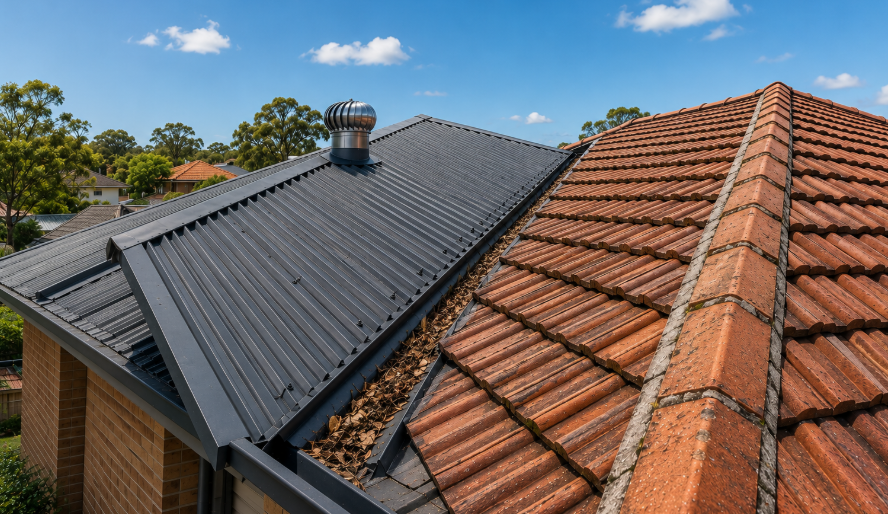
Roof leaks rarely start the day it rains. They start months earlier; a crack here, a loose screw there; and the storm finishes the job. Spotting the signs early means a $300 repair, not a $5,000 ceiling replacement, making roof repairs in Brisbane far more affordable when issues are caught in time.
Here's how to do that.
How to Hunt for a Leak Inside Your Home?
Look for brown ring stains on your ceiling, a musty smell in the roof space, cracked mortar along ridge caps, or debris clogging your valley gutters. Any one of those is a leak waiting to happen. Find them in August or September, before storm season, and you're ahead of 90% of Brisbane homeowners. Scheduling roof repairs in Brisbane at this stage can prevent costly storm damage later.
Why Brisbane Storms Expose Problems, Not Don't Create Them
A healthy roof handles a downpour fine. It's the roof that's been quietly failing; crumbling mortar, a rusted valley, a backed-out screw; that gets exposed the moment a supercell rolls through.
The storm gets the blame. The real issue started a year ago.
That's why checking your roof before October matters more than anything you do during storm season, and why many homeowners consider roof restoration in Brisbane before the wet season arrives.
Interior Daylight Test
If you can safely access your ceiling cavity, grab a torch and head up there on a bright, sunny day. Turn off your torch and wait a moment for your eyes to adjust. Look up at the roofing sheets or tiles. If you see tiny pinpricks of daylight piercing through, you have found an entry point. If daylight can get in, driving rain pushed by high storm winds will too.
While up there, check for:
Tidemarks: Dark, ringed water stains on your timber framing.
Damp insulation: Insulation should be bone-dry. If it feels soggy or smells musty, it is actively holding trapped water.
Metal vs. Tile: Where Roofs Fail
Different roofs fail for different reasons. Local homes are heavily split between metal (Colorbond or corrugated iron) and concrete or terracotta tiles. Each material has specific weak points when extreme summer heat gives way to a sudden downpour.
Why Metal or Colorbond Roofs Leak?
Colorbond is tough. But Brisbane's climate creates two specific problems worth knowing about.
Screws back out over time.
Each roofing screw has a rubber washer that seals water out. Your roof expands in the summer heat, reaches a surface temperature of 70°C, and contracts overnight. That daily movement slowly backs screws out millimetre by millimetre; the seal breaks. Water follows the screw shaft straight into your ceiling cavity.
Water can travel sideways.
During horizontal rain, the kind that comes with a 60km/h storm gust, water gets drawn between overlapping roof sheets by capillary action. It moves against gravity, wicking inward along the lap. You'll notice this as a leak that only appears during windy storms, not straight-down rain.
Signs your metal roof needs attention:
Rust spots around screw heads or at sheet edges
Lifted or buckled sheets near the ridgeline
Leaks that only show up during storms with strong winds
Why Tiled Roofs Leak?
Most Brisbane homes built before 2005 have concrete or terracotta tiles. The tiles themselves rarely break. What fails is the mortar holding the ridge caps in place.
When that mortar cracks, it blocks the small weep holes that let trapped moisture drain out. So during heavy rain, water backs up under the tiles with nowhere to go and finds its way to your ceiling instead.
Here's the part that confuses people: the drip rarely lands directly under the crack. Water travels along the roof truss for a metre or two before falling through. That's why homeowners say "the stain is nowhere near any broken tiles." They're right; the water just took a detour.
Signs your tiled roof needs attention:
Powdery or crumbling ridge cap mortar
Ridge caps that look shifted or lifted
Brown ring stains ("tidemarks") on your ceiling plasterboard
Cracked or slipped tiles are visible from the ground
Your Pre-Storm Roof Check
You don't need to get on the roof. Most of this is safe to do yourself.
The daylight test. Go into your roof space through the maintenance hole on a bright morning. Turn off the lights, let your eyes adjust. Pinpricks of light coming through = gaps that need fixing. Note the location and call a roofer.
Walk through every room and look up. Check for yellow or brown ring stains on the plasterboard. Even faint ones count. The actual leak entry point is often a metre or more away from where the drip lands; water travels along trusses before it falls.
Scan the ridgeline from the ground. Stand back and look at your ridge caps. Powdery, white mortar or visible gaps between caps mean the pointing has failed. That needs re-bedding and repointing before storm season.
Look into the valleys from a ladder at eave height. From the ground or eave level, look up the valley. Debris, rust, or buckled flashing are all problems. Leave anything structural to a licensed roofer.
Check around penetrations: Skylights, whirlybirds, solar panels, chimneys; anywhere something pokes through the roof needs flashing to seal it. Look for gaps or corrosion. These are common entry points that get missed.
Roof Repairs vs. Roof Restoration: Which Do You Need?
When homeowners look into fixing a leak, they often wonder whether they can get away with a quick patch or if they need a complete overhaul. Let's break down the practical differences so you can make an informed choice between roof repairsand roof restoration in Brisbane.
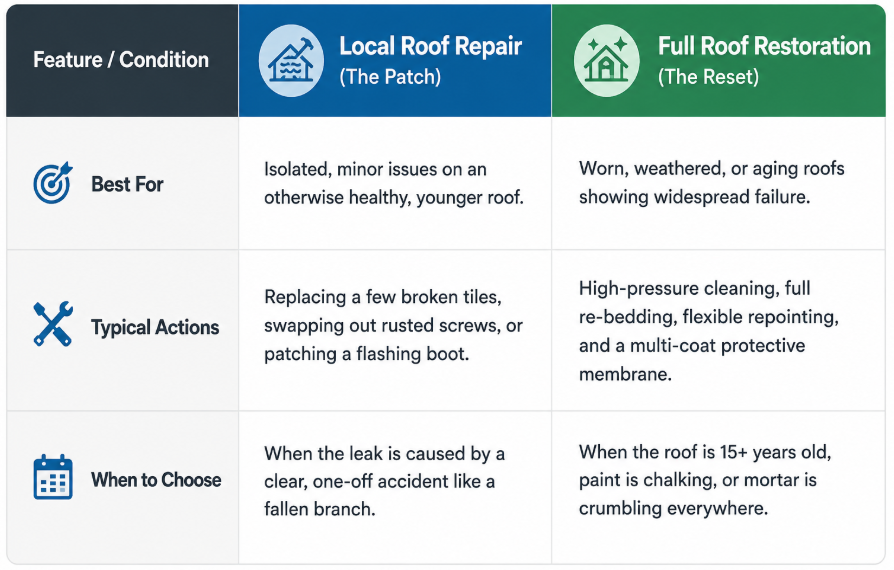
Trap of Constant Patching
If you are paying a contractor to come out every six months to chase a new leak in a different spot, you are paying for a temporary fix. A patch only fixes the immediate symptom; it does not stop the surrounding, aged materials from failing next week. A complete roof restoration in Brisbane resets the clock on your entire roof, protecting your structural timbers for the long haul.
Insurance Reality: The True Cost of Waiting
We hear from many homeowners who face a frustrating reality after a severe storm: their insurance claim was denied.
There is a massive misconception about home insurance. Insurers cover sudden, accidental storm damage; like a tree crashing through your tiles. They explicitly do not cover damage caused by a lack of maintenance.
If an insurance assessor climbs up after a storm and finds that your ceiling flooded because of long-term rusted valley gutters, uncleaned leaves, or cracked mortar bedding, they will stamp the claim as "pre-existing neglect". You will be left paying out of pocket for both the roof repairs in Brisbane and the internal plaster and carpet damage. In many cases, investing in roof restorationbefore storm season is a far more cost-effective solution than rebuilding a damaged home interior.
Straight Advice from A-Line Roof Restorations
We're a family-owned team of fully qualified tradesmen with over 15 years of experience working on Brisbane roofs. We hold formal qualifications in both Roof Tiling and Painting & Decorating, and we're fully licensed and QBCC registered.
When you call us, you get a roofer, not a salesperson who's never held a trowel.
If your roof needs one targeted repair to stay watertight, that's what we'll quote you. If it's at the point where a full restoration is the only thing that saves you from serious structural damage down the track, we'll tell you that straight too.
Don't wait for a midnight downpour to find out. Get in touch with A-Line Roof Restorations for a no-obligation roof inspection, and go into this summer knowing your home is covered with trusted roof repairs in Brisbane that homeowners can rely on.
Book your free roof inspection →
FAQs
1. When's the best time to get a roof inspection done?
August or September. It's dry, trades are available, and you've got enough lead time for repairs or coatings to cure before the first big storm fully.
2. How do you spot a roof leak before a storm hits?
Check your ceiling for brown tidemarks, your roof space for pinpricks of daylight, and your ridge caps for crumbling mortar. Blocked valley gutters are also a leading cause of leaks in heavy rain. Do this in August or September before Brisbane's storm season starts.
3. Does home insurance cover roof leaks from storms in Queensland?
Insurance covers sudden storm damage, but can reject claims if assessors find pre-existing wear, cracked mortar, rusted flashings, or neglected gutters. Keeping repair records protects your claim.
4. Why do valley gutters cause so many roof leaks?
Valley gutters channel water from two roof planes into one downpipe. During intense storms, leaf debris blocks the drain, water overtops the internal flashing, and enters the ceiling. Cleaning valleys before storm season prevents most of these leaks.